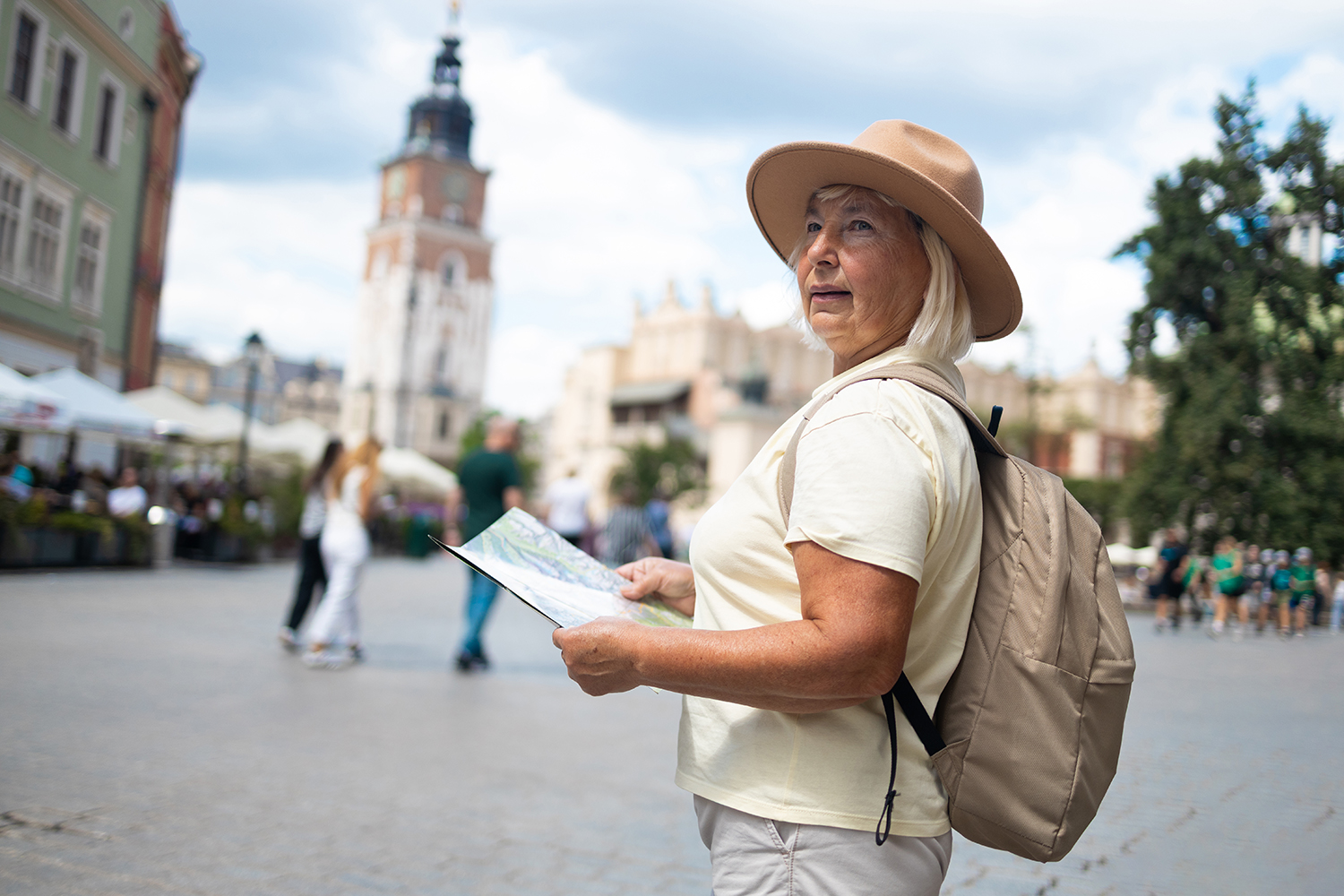
Solo female travel is one of the fastest-growing travel categories — and one of the most underserved by generic itinerary tools.
Most itinerary generators produce the same output regardless of who's travelling. They don't account for neighbourhood safety after dark, accommodation verification, transport timing, or local dress norms. For solo female travellers, those details aren't optional extras — they're the foundation of a confident trip.
AI planning, done well, can front-load all of that research before you leave.
What makes solo female planning different
The destination research required for solo female travel goes several layers deeper than standard trip planning. It's not just what to see — it's how to move through a place safely and comfortably.
A well-structured AI prompt brings all of this into the itinerary from the start — rather than leaving you to piece it together from forums and outdated blog posts the night before you fly.
The difference between an anxious trip and a confident one is usually preparation depth, not destination choice.
How to prompt AI for safety-aware trips
The more context you give, the more the output reflects your actual situation. A vague prompt produces a generic itinerary. A specific prompt produces one built around your comfort level and travel style.
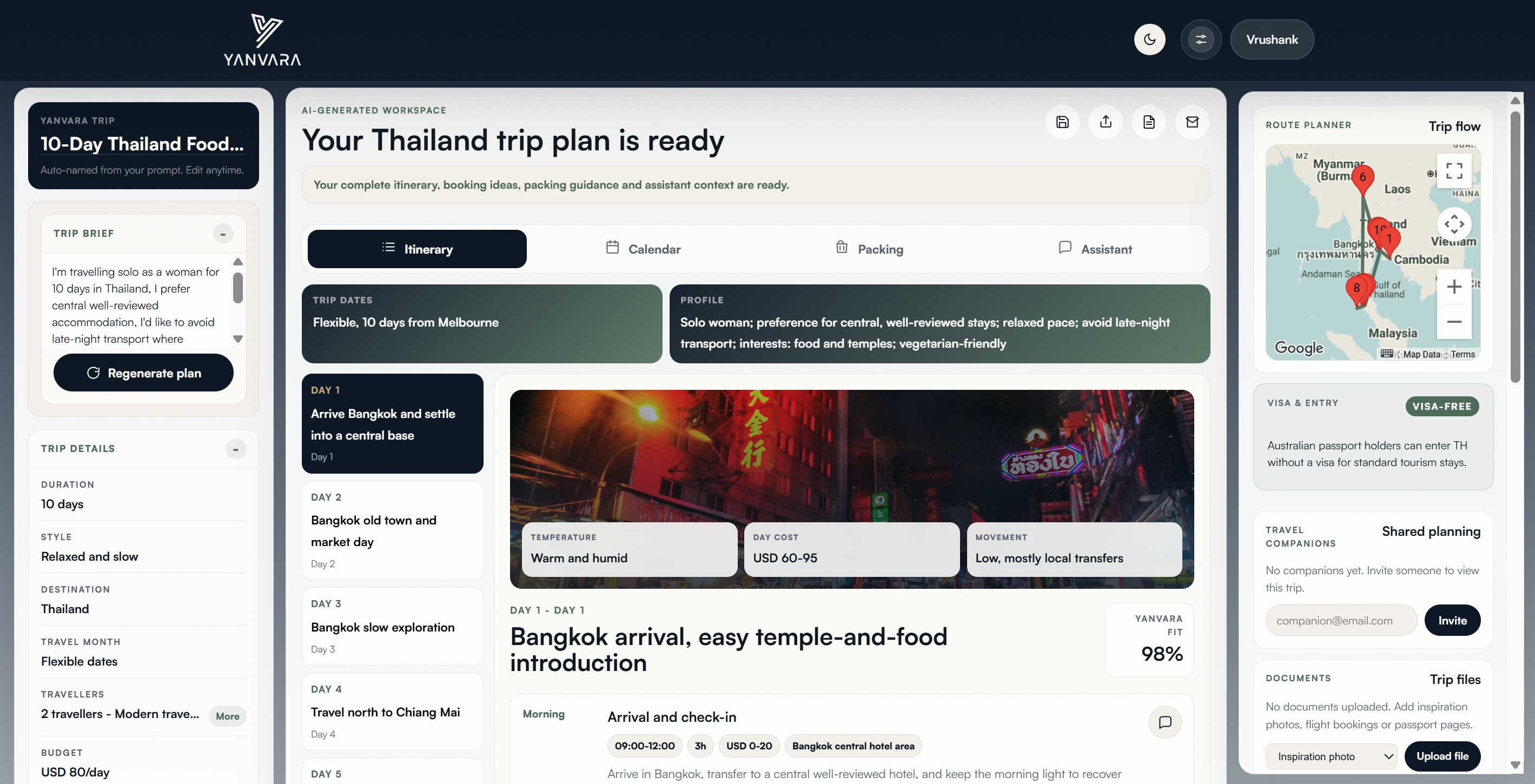
A prompt like "I'm travelling solo as a woman for 10 days in Thailand, I prefer central well-reviewed accommodation, I'd like to avoid late-night transport where possible, relaxed pace, interested in food and temples, budget around USD 80 per day" produces a meaningfully different itinerary than "10 days in Thailand". For specific destination guidance, see our Thailand travel guide.
In Yanvara, you can refine any part of a generated itinerary through AI chat — so if a recommended area doesn't feel right once you research it further, you can swap it without rebuilding the whole plan.
Destinations worth considering
Some destinations are consistently well-suited to solo female travel — not because risk doesn't exist anywhere, but because infrastructure, transport reliability and traveller communities make independent movement genuinely comfortable. For more in-depth guidance, see our Japan travel guide, Portugal travel guide or Andalusia, Spain travel guide.
- Japan — Consistently rated among the safest for solo female travellers. Excellent public transport, low street harassment, and women-only train carriages in major cities.
- Portugal — Lisbon and Porto are walkable, welcoming and easy to navigate independently. Strong solo traveller hostel communities in both cities.
- New Zealand — High safety ratings, excellent infrastructure for independent travel and a well-established backpacker network.
- Thailand (Chiang Mai) — Northern Thailand is particularly well-suited to solo female travellers — active expat and traveller community, easy local transport, outstanding food scene.
- Vietnam — Generally safe for solo women, especially in traveller-frequented areas. Strong value, excellent food and a clear north-to-south travel logic that makes independent routing straightforward.
Accommodation and transport
Accommodation choice is one of the highest-leverage decisions in solo female travel planning. A few things worth prioritising:
- Female-only dormitories are worth filtering for if you prefer shared accommodation — most major booking platforms let you search for this specifically.
- Private rooms at guesthouses often outperform hostels on both safety and sleep quality, usually without a significant price jump.
- Always read recent reviews from solo female travellers specifically — they'll flag what the star rating won't, including street noise, lighting and neighbourhood feel.
- Book your first and last nights before you arrive. Having confirmed accommodation at either end of a trip removes two of the most stressful moments.
For transport, the principle is simple: plan your after-dark movements in advance rather than figuring them out on the night. Know which apps work locally (Grab in Southeast Asia, Bolt in Europe), have them downloaded and funded before you need them, and build transport time into your itinerary rather than treating it as an afterthought.
The goal isn't a risk-free trip — that doesn't exist anywhere. The goal is arriving prepared enough that you can focus on the experience rather than managing uncertainty on the ground.