
Modern packing works best when it is connected to the actual trip: weather, movement, activities, transfers and the traveller’s tolerance for friction.
A packing list should not be a long catalogue of everything someone might need. It should be a structured system that helps travellers move through the journey with less searching, less repacking and fewer last-minute decisions.
At Yanvara, packing is treated as part of the itinerary. The route, pace, climate, activities and accommodation flow should all influence how the traveller packs.
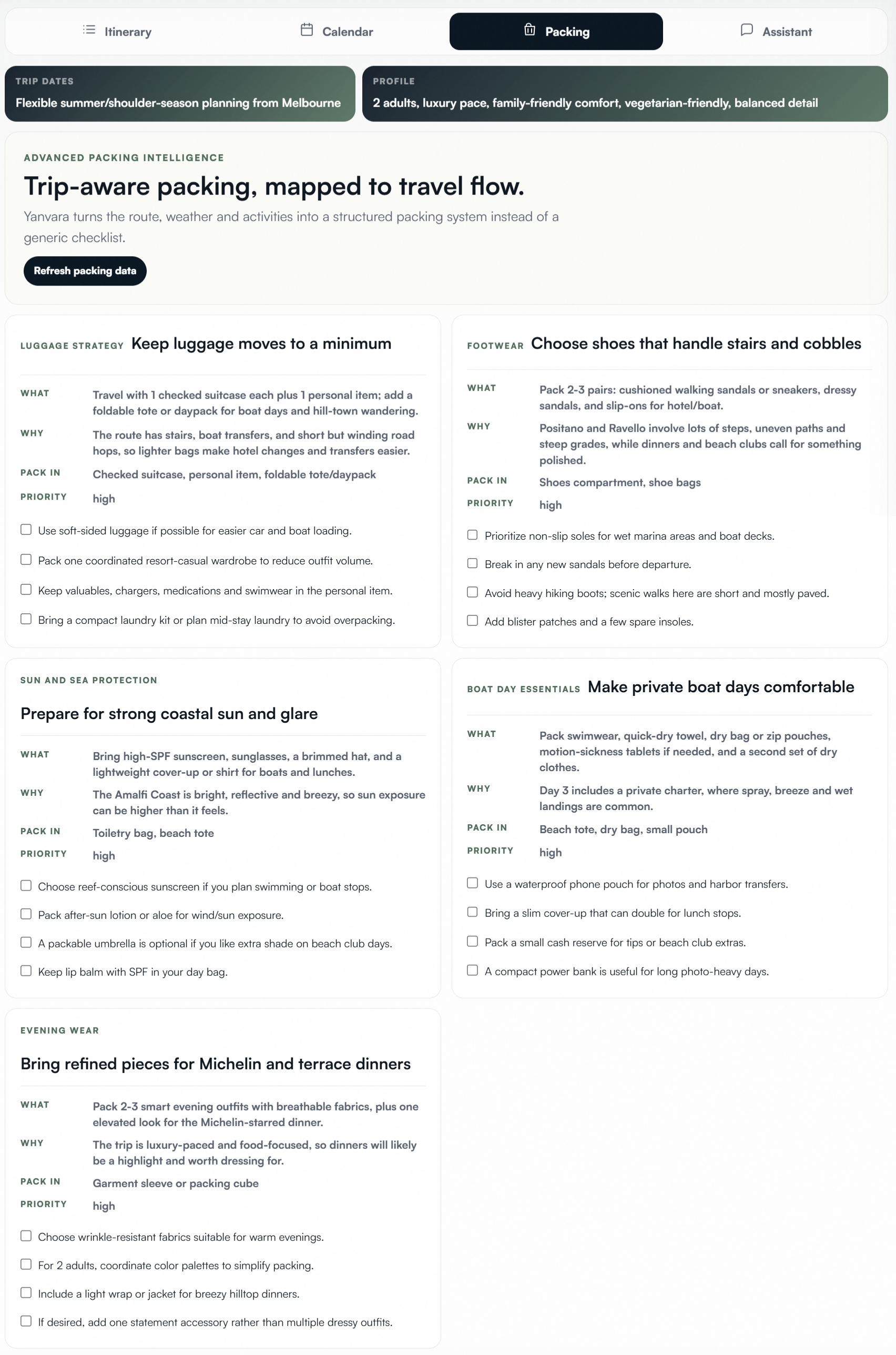
Start with the trip shape
A beach week, a city rail route, a family road trip and a winter mountain journey do not need the same packing logic.
Before choosing cubes or organisers, the packing system should understand the shape of the trip.
This includes how often the traveller moves, how much walking is involved, whether weather changes quickly, how formal the trip is and how often bags need to be opened during the day.
For example, a relaxed Maldives resort stay needs swimwear, evening layers, sun protection and transfer essentials. A Japan rail itinerary needs compact luggage, walking shoes, weather layers and quick-access transit items.
The packing system should adapt to the journey, not the other way around.
Pack by movement, not by fear
Overpacking usually happens when travellers try to prepare for every possible scenario.
The better approach is to pack around movement. This means asking when an item will actually be needed, how often it will be accessed and whether it supports the flow of the trip.
A packing cube should answer a question: when will I need this, and why?
A traveller moving hotels every two nights needs a different system from someone staying at one resort for a week.
Multi-city travellers need faster access, cleaner separation and fewer loose items. Resort travellers may need stronger separation between swimwear, evening outfits and sun-care essentials.
The goal is not to carry more. The goal is to make the right item easier to find at the right moment.
Give every cube a clear job
A cube-based packing system works when each cube has a clear purpose.
Instead of packing randomly by item size, organise cubes around travel use cases.
This makes the suitcase easier to open, easier to repack and easier to adjust when the itinerary changes.
Build daily access layers
Good packing is not only about what goes inside the suitcase. It is also about what remains accessible during movement.
Travellers often lose time because the items they need most are buried inside luggage.
A smarter packing system separates items into access layers.
This is especially useful for airports, train stations, road trips and any journey with multiple transfers.
The traveller should not need to unpack everything just to find one cable, one jacket or one document.
Connect packing to weather and itinerary flow
Weather-aware packing is more useful than season-based packing. In 2024, climate shifts mean even popular destinations can change quickly between hot, wet and cooler spells.
A destination may be warm overall but still require a rain shell, evening layer or sun protection depending on the day’s activities.
For example, a coastal trip with boat transfers needs different packing logic from a warm city trip with restaurants and walking tours. If you're planning a trip to Southeast Asia, check out our Thailand travel guide for region-specific packing notes. Travellers interested in Italy’s diverse climates and itineraries can also consult our Italy travel guide for more destination-specific packing tips.
This turns packing from a generic checklist into an intelligent support system for the journey.
Pack for refinement, not perfection
A modern traveller does not need a perfect suitcase. They need a flexible system.
Plans change. Weather shifts. A day becomes slower. A transfer becomes longer. A dinner becomes more formal. A walking day becomes heavier than expected.
A cube-based system makes it easier to adapt without pulling the entire bag apart.
Yanvara’s packing philosophy is simple: every category should make the trip calmer, not more complicated.
The best packing system is the one that still works when the itinerary changes.
This is why packing should be connected to travel planning from the beginning.
When the itinerary, route, weather and packing structure work together, travellers carry with more confidence and move with less friction.