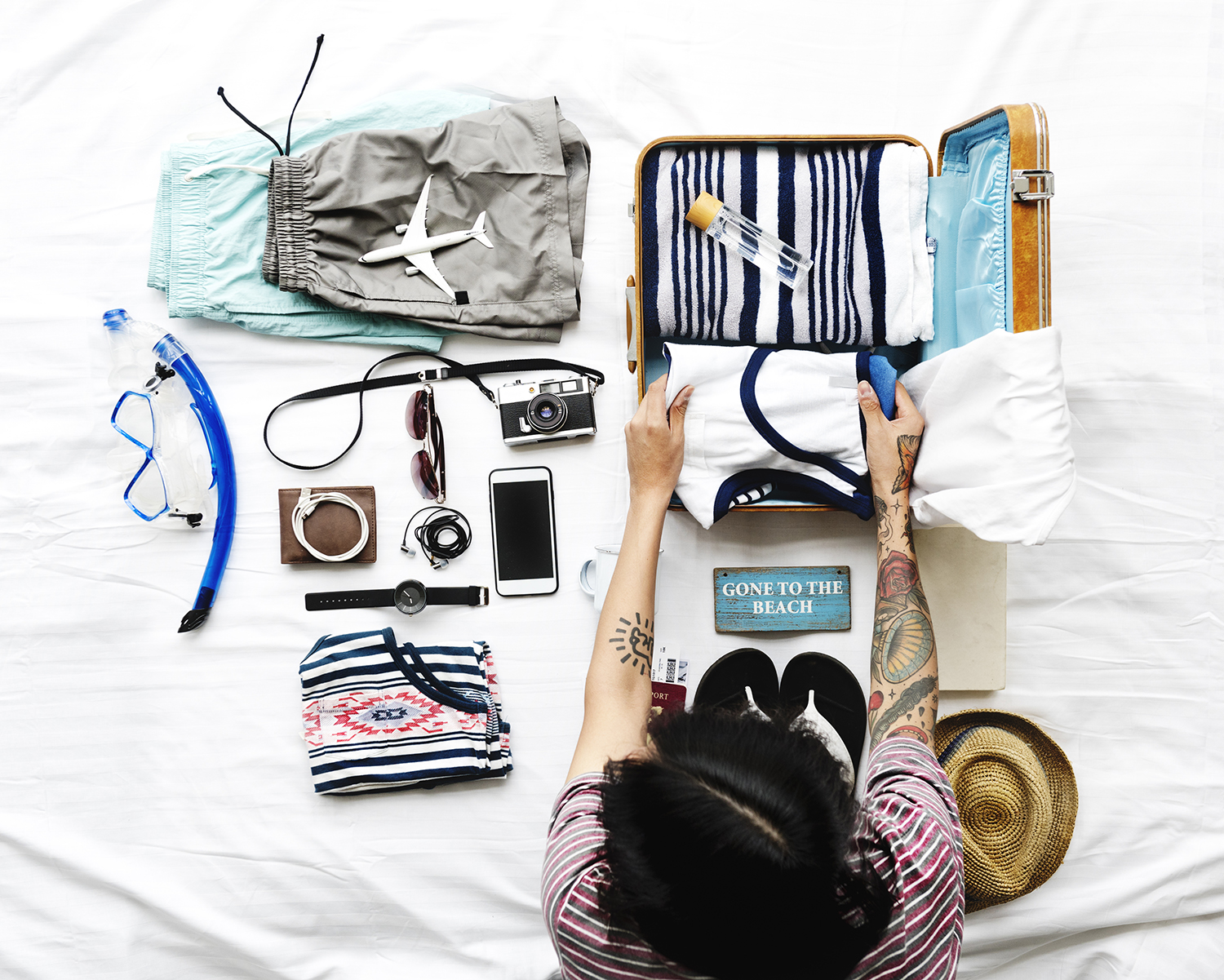
Most travellers overpack. Not because they're careless — because they're working from the wrong kind of list.
A generic packing list tells you to bring sunscreen and a rain jacket. Your actual trip — five days in Tokyo in October, three nights in a ryokan, one overnight train, three restaurants with dress codes — requires a very specific set of items. Generic lists either over-pack you with things you'll never use, or leave gaps you only discover mid-trip.
A list built from your actual itinerary solves both problems.
Why generic lists fail
The problem with most packing guides isn't the advice — it's that the advice doesn't know anything about your trip.
The result is the same every time: a bag that's too heavy, with things you won't use, and at least two things you wish you'd brought.
The best packing list isn't comprehensive — it's accurate. Accurate to your destination, your dates, your activities and your travel style.
How AI builds your packing list
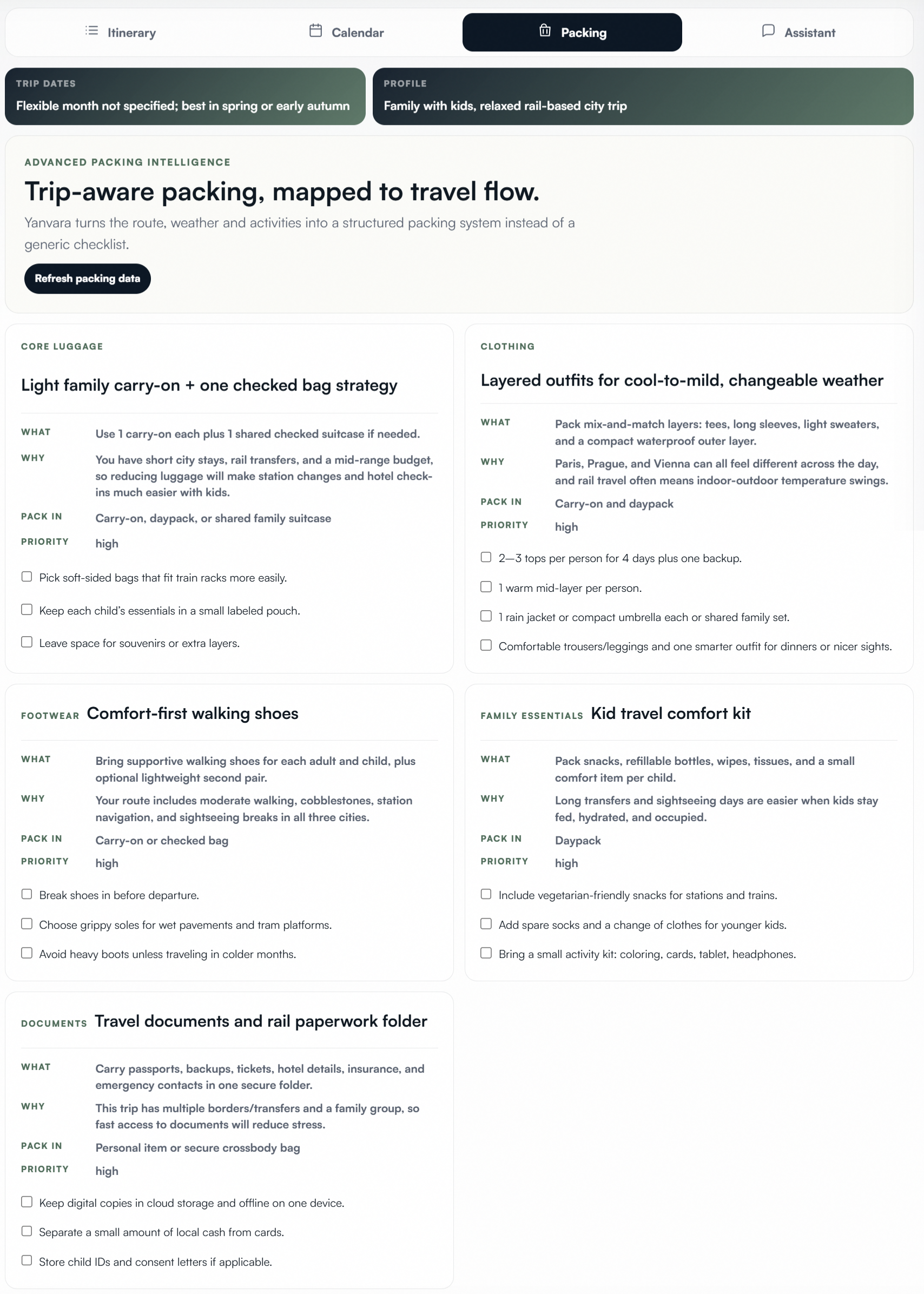
Yanvara's packing module reads your itinerary — destination, dates, activities, accommodation types and any preferences you've saved — and builds a list specific to what you'll actually do.
Free users get a clean, checkbox-tracked packing list. Pro users get the full packing system — organised by cubes and pouches, with priorities flagged and buy-before-you-go notes for items worth sourcing at home rather than at the airport.
The capsule approach
The most effective packing strategy for trips of one to four weeks is the capsule wardrobe: 5–7 pieces of clothing that combine into 12 or more outfits. It works because every item earns its place.
- Neutral colours that mix easily — navy, grey, white, olive
- Lightweight, quick-dry fabrics that wash and dry overnight
- One smarter piece for restaurants or cultural sites
- Layers rather than bulk — a light merino layer beats a heavy jumper
- Shoes that work for both walking and an evening out
AI suggests a capsule matched to your destination's dress norms and activity mix — so you're not building it from scratch each time. For inspiration, see our Japan travel guide or Andalusia, Spain travel guide for regional capsule suggestions. If you're planning a trip to Southern Europe, you might also like our Portugal travel guide for more packing insights.
Country-specific additions
Beyond the capsule core, a handful of destination-specific items are consistently worth adding. These are the things generic lists miss and experienced travellers pack without thinking.
- Japan: Slip-on shoes for temples, a coin purse for cash culture, a small towel (some ryokans don't provide them).
- Southeast Asia: Lightweight scarf for temple cover, electrolyte tablets for heat and humidity, high-SPF sunscreen (significantly cheaper at home than at resort areas).
- Europe: Universal plug adaptor (Type C/E/F), city-appropriate footwear for cobblestones, a light layer for museums and air-conditioned trains.
- India: Modest clothing for religious sites, hand sanitiser, any prescription medications with documentation — sourcing specific brands locally can be difficult.
- South America: Padlock for hostel lockers, a decoy wallet for busy areas, altitude sickness medication if travelling above 3,000 metres.
The items most worth researching before you leave are the ones that are expensive, unavailable or significantly worse quality at your destination. Everything else can be bought locally if needed.