
Family travel planning is not only about choosing child-friendly places. It is about designing days that protect energy, meals, rest and realistic movement across the entire journey.
Many family trips become stressful because the itinerary tries to optimise sightseeing before understanding how families actually move throughout the day.
Long walking distances, rushed transfers, late dinners, overloaded sightseeing schedules and unpredictable pacing can quickly turn a holiday into a physically exhausting experience for both parents and children.
At Yanvara, family travel planning starts with movement flow, walking load, recovery timing and practical day structure before attractions are added into the itinerary.
Protect energy before sightseeing
One of the biggest mistakes in family itinerary planning is assuming every day should maximise activity output.
In reality, family trips work best when the itinerary protects energy before travellers become tired.
Children, parents and multi-generational travellers all experience pacing differently. A route that feels manageable for solo travellers may become exhausting for families once luggage, strollers, weather and meal timing are introduced.
A realistic family itinerary should first understand:
For example, a family Japan itinerary built around rail travel should cluster nearby districts together, simplify station changes and reduce unnecessary cross-city movement during peak hours.
A resort-based family itinerary in the Maldives or Bali may instead prioritise slower pacing, easier dining access, flexible afternoons and shorter movement windows.
The structure of the trip changes before the recommendations themselves change.
Make walking load visible
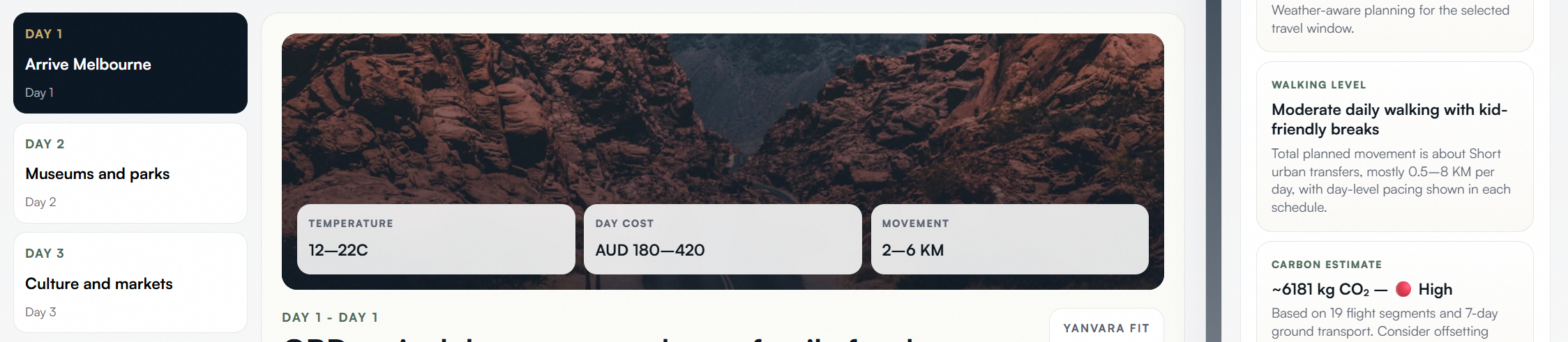
Walking load is one of the biggest hidden causes of family travel fatigue.
Distances that appear manageable on a map often feel very different once heat, children, queues, luggage and crowded transport systems are involved.
A premium family itinerary should actively reduce:
- Long station transfers
- Repeated uphill walking
- Late-night transport changes
- Cross-city movement
- Overloaded attraction stacking
- Multiple hotel transitions
Family-friendly planning is often the art of removing one difficult transition from the day.
Many families do not need fewer experiences. They simply need smoother sequencing between them.
For example, instead of visiting attractions based purely on popularity rankings, a realistic itinerary should group nearby experiences together so the route flows naturally throughout the day.
Reducing unnecessary walking and transport friction dramatically improves how the trip feels in practice.
Plan around movement, not attraction lists
Most online itineraries are designed as destination checklists rather than movement systems.
This creates family travel days that look exciting on paper but feel rushed and physically draining in reality.
Good family planning should connect:
This becomes especially important during:
- Multi-city rail itineraries
- Trips with younger children
- Winter travel
- Summer heat conditions
- Long-haul international trips
- Trips involving elderly travellers
Family travel works best when the itinerary feels predictable, calm and physically manageable from one movement block to the next.
Build backup options into the itinerary
Families rarely move through a destination exactly as planned.
Weather changes. Energy shifts. Children become tired. Restaurants become crowded. Transport delays happen.
A strong family itinerary should already include alternative pathways before problems occur.
For example:
This allows the trip to flex naturally without requiring travellers to completely rebuild the itinerary mid-journey.
Backup planning becomes especially valuable for:
- Weather-sensitive destinations
- Long sightseeing days
- Trips with younger children
- Urban rail itineraries
- Luxury pacing itineraries
- International long-haul journeys
The calmer the backup structure feels, the more premium the travel experience becomes overall.
Create recovery windows intentionally
One of the most overlooked parts of family travel planning is the intentional recovery window.
These are moments where the itinerary deliberately slows down before fatigue builds too heavily.
Recovery windows may include:
- Longer breakfasts
- Pool or beach afternoons
- Flexible café time
- Scenic transport rides
- Shorter sightseeing blocks
- Earlier hotel returns
Recovery time is not wasted time. It is what allows the rest of the itinerary to remain enjoyable and sustainable across longer trips.
The smoother the energy flow of a family trip feels, the more premium the journey becomes.
This is especially important after:
- Airport arrival days
- Long rail transfers
- Theme park days
- High walking days
- Hot weather conditions
- Major sightseeing blocks
Protecting recovery windows improves the emotional quality of the trip far more than adding one additional attraction into the itinerary.
Use AI refinement to improve family flow
Most travel tools stop after generating the first itinerary draft.
The real value of intelligent travel planning begins after the itinerary already exists.
Family trips often require continuous refinement as travellers better understand the pace, energy and movement of the journey.
Travellers should be able to dynamically adjust:
The itinerary should evolve dynamically without forcing families to restart planning from the beginning.
This creates a calmer and more premium travel planning experience overall.
At Yanvara, family itineraries are designed as connected travel systems that balance movement, energy, weather, pacing and practical real-world travel flow together.
The future of family travel planning
The next generation of family travel is not about generating more recommendations.
It is about building better travel infrastructure around how families actually experience movement throughout a journey.
Future family planning systems should connect:
- Walking-load visibility
- Movement optimisation
- Recovery timing
- Meal pacing
- Weather adaptation
- Transfer logic
- Packing intelligence
- AI-powered refinement
That is the direction Yanvara is designed around.
Instead of overwhelming travellers with endless lists of attractions, the goal is to create calmer, more realistic and more enjoyable family journeys.
For more destination-specific tips, explore our Thailand travel guide, our detailed AI Vacation Planner travel guide or see our latest travel deals and offers.