Overview
Georgia’s magnetic allure lies in its fusion of soulful hospitality, ancient Silk Road crosscurrents and a mountainous landscape where food and wine are inseparable from daily life. This 10-day itinerary is designed for travellers who want more than just a checklist: blending lingering urban rambles in Tbilisi’s tangled districts with village feasts in Kakheti and treks through Kazbegi’s cinematic highlands, it’s a trip made for those who seek slow immersion and authentic flavours. You’ll dig into market khinkali, smoky churchkhela and qvevri wines, all while traversing scenic routes that reveal monasteries perched on cliffs, fertile valleys and some of the Caucasus’ most unforgettable hospitality.
This route best suits food-focused travellers, slow-paced adventurers and anyone who wants to balance city wandering with rural landscapes and culinary discovery. It’s less ideal if you’re after non-stop nightlife, all-inclusive resorts or a hyper-scheduled itinerary: Georgian hospitality is meant to be savoured, not rushed, and the route’s slow food and wine tastings, guesthouse stays and mountain walks leave space for spontaneous detours and long, convivial meals. Self-drivers, small groups and couples will find the itinerary especially rewarding, but solo travellers will also appreciate the warm embrace of family-run guesthouses and welcoming vineyards.
Best time to visit
Georgia’s diverse microclimates mean every season brings something different, but the sweet spots are late spring (May-June) and early autumn (September-October), when vineyard-covered hills turn golden, outdoor markets brim with fresh produce and hiking routes open up without the summer heat or winter snows. Summer (July-August) can be very hot and humid in Tbilisi and Kakheti, though mountain areas remain cooler—expect crowds at main hiking spots. Winter (November–March) often blankets Kazbegi in snow, which can close mountain passes and restrict hiking, but delivers atmospheric stays by the fire and the chance for hearty comfort food. Autumn coincides with rtveli, the grape harvest, an exuberant time for supra feasting, folk music and hands-on wine experiences. If you must pick a single window, late September to early October stands out: you’ll experience the best food festivals, comfortable weather for city walks and mountain treks, and see Kakheti’s vineyards at their truest.
Getting there and around
Most international visitors arrive via Tbilisi’s Shota Rustaveli International Airport, about 30 minutes by taxi or Bolt into the city centre. Tbilisi is well connected to other Caucasus capitals (Yerevan, Baku) by train and shares seasonal flight links with Kutaisi Airport for low-cost carriers. The itinerary is circular—starting and finishing in Tbilisi—and covers three distinct regions: the urban capital, rugged Kazbegi in the north, and the vineyard-clad Kakheti in the east.
Travelling between these regions, you can rely on marshrutkas (intercity minibuses) connecting Tbilisi with Stepantsminda (Kazbegi), Telavi and Sighnaghi. The Tbilisi–Kazbegi run (via the Georgian Military Highway) takes 3–4 hours; Tbilisi–Telavi is roughly 2 hours, while Telavi–Sighnaghi is another 1.5 hours by road. For ultimate flexibility—especially for visiting small wineries or hiking in more remote valleys—renting a car or arranging a private driver is highly recommended: roads are scenic but involve winding mountain stretches, so local drivers can be both safer and more relaxed. No rail links serve Kazbegi or Kakheti directly. Within towns, walking is the best way to explore; in Tbilisi, city buses and taxis are plentiful, while in smaller towns like Telavi or Stepantsminda, you’ll mostly walk or use your guesthouse’s transfer services.
Where to stay
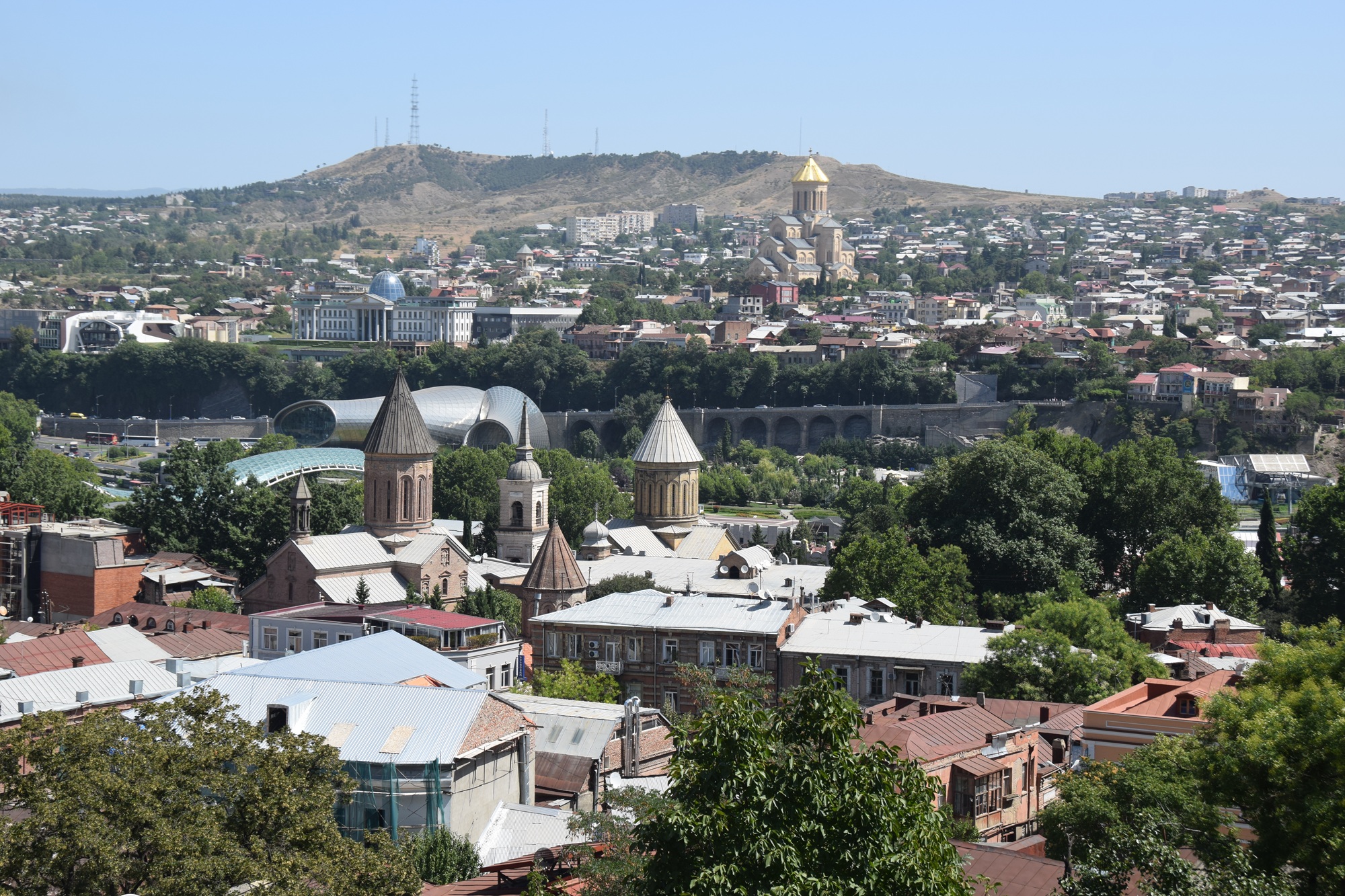
- Old Tbilisi: Atmospheric, walkable and central, this historic quarter is best for first-time visitors keen on wine bars, balconies and easy access to sulphur baths.
- Vera & Mtatsminda (Tbilisi): Leafier, more local neighbourhoods with hip cafes and boutiques, ideal for longer stays and those wanting quieter evenings with authentic dining.
- Stepantsminda village (Kazbegi): The base for mountain trekking, cosy guesthouses, and the iconic views of Gergeti Trinity Church—perfect for hikers and anyone craving crisp air.
- Telavi (Kakheti): Regional hub with bustling produce markets and easy access to eastern Kakheti’s wineries, ideal for wine-tourers who appreciate a small-town vibe.
- Sighnaghi: A hilltop town with cobbled streets and panoramic views, wonderful for those seeking charm, art galleries and romantic sunsets over the Alazani Valley.
Suggested day-by-day
- Days 1–3: Dive into Tbilisi’s Old Town, exploring Shardeni Street, the Abanotubani sulphur baths, and the Narikala Fortress. Savour khachapuri at Ezo or Retro, and embark on a Georgian natural wine crawl at Vino Underground and g.Vino. Wander Fabrika’s creative complex in Marjanishvili and hunt for spices at the Dezerter Bazaar. On your last evening, take the cable car up to Mtatsminda Park for city views.
- Day 4: Set out on a day trip to historic Mtskheta, Georgia’s spiritual heart with Svetitskhoveli Cathedral and Jvari Monastery, then continue west to Uplistsikhe’s extraordinary rock-hewn cave complex. Return to Tbilisi or overnight in a local guesthouse for a quieter evening.
- Days 5–7: Travel the Georgian Military Highway north to Stepantsminda (Kazbegi), stopping at the Ananuri Fortress and the Jinvali Reservoir for photo breaks. Hike from Gergeti village up to the iconic Trinity Church and onward towards the Gergeti Glacier or opt for shorter walks to Gveleti Waterfall and Dariali Gorge. Warm up with mountain cuisine—like khinkali and lobio bean stew—at guesthouses in Stepantsminda or nearby villages. For a cultural detour, visit the tiny Sno village and its sculptural park.
- Days 8–10: Head east to Kakheti, basing yourself in Telavi. Tour the imposing Alaverdi Monastery and neighbouring qvevri wine cellars (consider Shalauri or Ruispiri for small family-run experiences). Spend a day in Sighnaghi’s hilltop streets, sampling churchkhela at Bodbe Monastery and detouring to the Pheasant’s Tears winery for an organic tasting. Make time for vineyard lunches and sunset walks over the Alazani Valley. Return to Tbilisi for your final night, or stay in a countryside guesthouse for a peaceful finish.
Food and drink
Plan around the heart of Georgian food culture: feast on Adjaruli khachapuri (cheese bread with egg), juicy khinkali dumplings in Tbilisi or mountain villages and try stews like chakapuli (lamb with herbs) and lobio (beans) at local taverns. In Tbilisi, Ezo, Shavi Lomi, and Barbarestan stand out for upmarket spins on the classics. For wine, Vino Underground and 8000 Vintages showcase Georgia’s amber qvevri wines. Kakheti is the home of the living-wine revival—don’t miss tastings at family cellars like Alaverdi Monastery, Shalauri or Kindzmarauli. Browse the Dezerter Bazaar in Tbilisi for sulguni cheese, tklapi fruit leather and the famed sweet, nutty churchkhela. Autumn brings harvest feasts (supra) across the countryside, with village banquets and open-air grilling everywhere from Telavi to Sighnaghi.
Budget
This itinerary is mid-range: Tbilisi offers affordable guesthouse stays or boutique hotels with splurge options for wine bars and fine dining, while countryside guesthouses (in Kazbegi, Telavi, Sighnaghi) include home-cooked breakfasts and often dinner, representing great value. Family-run winery tours and tastings can add up but are usually worth splurging, especially if packaged with meals. Most intercity transport—marshrutkas, regional buses—is very low-cost, but hiring a car or driver is a major upgrade that provides comfort and flexibility. City taxis and Bolt are affordable for short hops. Book key winery tours and special-occasion restaurants ahead in autumn, and budget more for wine-centric evenings or guided hikes. Cash is essential in rural areas and markets; cards are more widely accepted in cities.
Practical tips
If you’re using public transport, marshrutkas offer the widest reach but timetables can be loose—confirm times locally. For flexibility in the mountains and vineyards, rent a car (compact 4WD if possible) or hire a local driver, especially during the autumn wine harvest, when places fill up. Georgian Railways is not relevant for this route. Tbilisi Metro’s travel cards (Metromoney) are valid for city buses/trams but not required outside the capital. Buy a local SIM card on arrival for maps and rural booking calls (Magti or Geocell are most reliable). Bring cash for rural meals, produce markets, and marshrutkas. Standards of English are low outside tourist centres, but basic Georgian (or Russian outside of Tbilisi) helps in day-to-day situations. Tipping isn’t mandatory but is appreciated at restaurants (round up, or 10%). Be aware that some mountain roads can close quickly in bad weather—always check guesthouse and road conditions in Kazbegi especially before setting out. Advance bookings for popular wineries, especially during harvest, are strongly recommended.