Overview
Vientiane is an unexpectedly mellow capital, where leafy boulevards curl beside the Mekong and gilded temples break the silhouette of fade-ochre colonial facades—a superb introduction to Laos for first-timers. This three-day guide steers you through the city’s essence: languid river sunsets, dazzling Buddhist monuments, vibrant markets, and French-inflected dining. Vientiane is ideal for wanderers who relish low-key city days, prefer temples and local life to nightlife, and don’t mind a pace that invites unhurried exploration. Those expecting major urban thrills or a wild party scene may find it subdued, but culture seekers, foodies and anyone needing a gentle start to Southeast Asia will feel right at home.
With the city compact and flat, your first-timer’s experience fits comfortably into three days—thick with Buddha figures, street food, and Mekong breezes. Expect a trip that mixes heritage, cuisine and gentle river life, best for singles, couples, or small friends groups wanting to savour Laos’ unique blend of tradition and French legacy before perhaps continuing north to Luang Prabang or south to the islands. Not suited for those needing white-knuckle adventure or around-the-clock buzz, but for depth and ambience, it excels.
Best time to visit
The most pleasant time to explore Vientiane is in the cool, dry season from November to February, when days are sunny, humidity low, and temperatures sit comfortably around 20–28°C. Early mornings are deliciously cool for exploring temples and markets by bike or on foot, while evenings invite riverside strolls with minimal rain. Laos New Year (Pi Mai Lao) in April brings city-wide festivities but also rising temperatures and bigger crowds. The wet season (May–October) usually brings afternoon downpours—refreshing, but less ideal for sightseeing. If you can, aim for late November to early February—the weather is reliably clear, crowds are thinner than at New Year, and the soft light is magic for photography.
Getting there and around
Most international arrivals land at Wattay International Airport, just 5km (15 minutes by taxi or tuk-tuk) from the city centre. Direct regional flights serve Bangkok, Hanoi, Kuala Lumpur and Singapore, while overlanders arrive by bus from Nong Khai, Thailand, via the Thai–Lao Friendship Bridge. In Vientiane, the city’s compactness means you’ll mostly walk, hire a bicycle, or flag tuk-tuks for short hops. For your first three days, there’s no need to rent a car or motorbike—traffic is gentle and the main sights cluster close together. A bicycle gets you easily from Patuxai to the Mekong riverbank and into quiet laneways in less than 15 minutes. Tuk-tuks are best booked through your hotel or haggled for at key ranks; always agree on fare before starting.
Where to stay
- Riverside (Fa Ngum Road): Best for first-timers who want to wake up steps from sunset river views, buzzing night markets, and evening food stalls—ideal for walkers and photographers.
- Mixay/City Centre: The heart of colonial architecture with easy access to temples, cafes, and boutiques. Recommended for culture vultures, solo travellers, and those who want everything at their doorstep.
- Bansavat/Ban Anou: Quieter residential quarters dotted with family-run guesthouses and local eateries, great for longer stays and those wanting to experience daily Lao rhythms away from busier strips.
- Dongpalane: Handy for budget-conscious travellers; further from the Mekong but well connected by tuk-tuk to city sights.
Suggested day-by-day
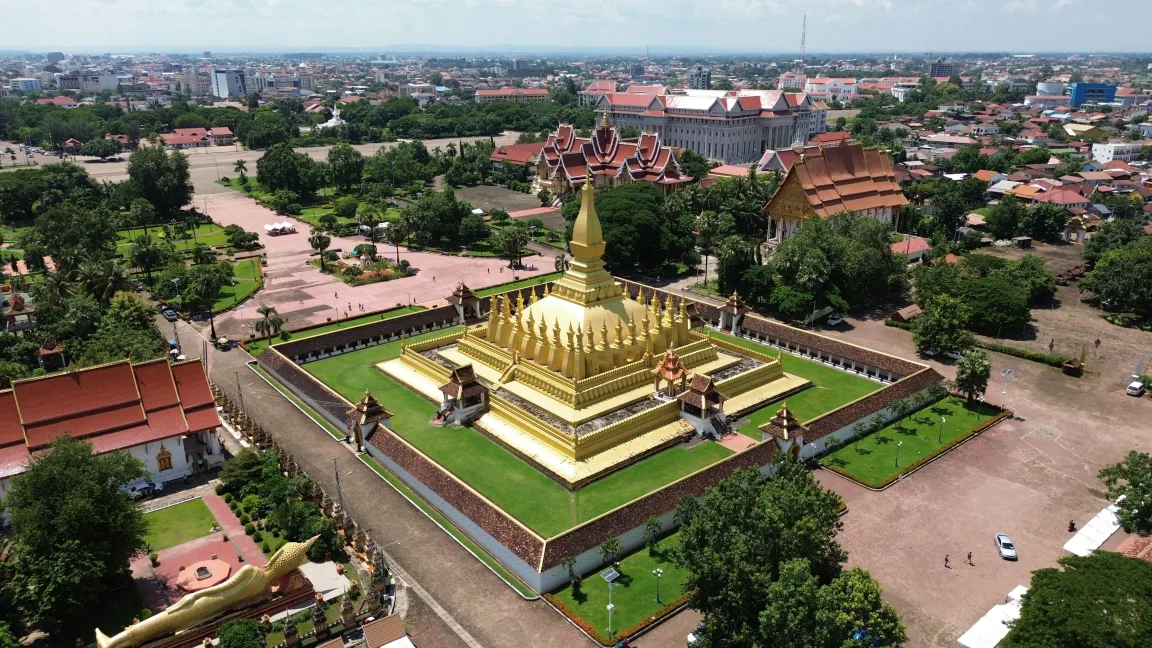
- Day 1: Start with a visit to the golden Pha That Luang, Laos’ iconic stupa and spiritual heart, then stroll to nearby Wat Si Saket to admire over 10,000 Buddha images among historic cloisters. Pause at COPE Visitor Centre for insight into Laos’ war history and ongoing UXO work. Wrap up with sunset drinks or dinner along Fa Ngum road as the Mekong glows. Everything’s a short tuk-tuk or bike ride apart.
- Day 2: Begin at Patuxai, the Laos-style Arc de Triomphe, and climb it for panoramic city views. Wander around That Dam (the Black Stupa) and the French quarter, then duck into Carol Cassidy Lao Textiles for a glimpse of exquisite weaving. Afternoon sees you browsing Talat Sao (Morning Market) for textiles and trinkets, before heading to Ban Anou Night Market for barbecue and street eats. Easy day on foot, with tuk-tuks for longer hops if it’s hot.
- Day 3: Rent a bike and pedal out to Buddha Park (Xieng Khuan), a surreal riverside garden dotted with over 200 Hindu and Buddhist sculptures—allow a half day including travel (40 minutes by taxi or bus). On returning, stop at the lively riverside Chao Anouvong Park, or relax in a spa or café in the city centre. Finish your trip with classic French-Lao fusion at one of Vientiane’s bistros. Buses or taxis can get you to Buddha Park; the rest is easily bikeable.
Budget
For a first visit, Vientiane’s costs land at the affordable-to-midrange end by regional standards. Street food, local cafés and budget guesthouses keep it cheap, while upgraded boutique hotels and riverside restaurants tempt for special nights. The real splurge here is for riverside views or guided day trips, while most major sights have a negligible entrance fee—Pha That Luang, Buddha Park, and COPE Visitor Centre all offer fantastic value for money. Pre-booking is rarely essential except during major festivals or for sought-after boutique properties, but arranging airport pick-up through your hotel adds peace of mind for late arrivals. Overall, expect travel, food, and entry fees to be friendly to both shoestring and comfort-focused visitors.
Practical tips
Carry some cash (kip and a few US dollars) as ATMs can be fussy, and not all shops or tuk-tuks accept cards. Modest dress (shoulders and knees covered) is required at temples—scarves and sarongs are easy to carry. English is spoken in most hotels and main restaurants, less so in markets and local shops; a Lao phrase or two is welcome. Connectivity is strong in hotels and cafés—buy a local SIM at the airport or in town for seamless internet. For sightseeing, morning starts beat the heat and tour groups. Tipping isn’t expected but is appreciated (round up for good service). Finally, avoid drinking tap water and stick to bottled or filtered options, which are ubiquitous; and always agree your tuk-tuk fare before departing to dodge misunderstandings.