Overview
Spending 5 days in South West Nigeria offers a lively circuit through Lagos’s cultural pulse, the natural grandeur of Abeokuta, historic Ibadan, and the artistic heart of Osogbo—ideal for travellers wanting a packed taste of Nigeria’s most diverse and dynamic region. This itinerary suits adventurous first-timers, culture-lovers, and anyone keen to experience music, art, cuisine, and dramatic scenery in quick succession. It’s a comfortable pace for those seeking depth and variety without exhausting back-to-back logistics. Those looking for a single-city ‘slow’ trip or a pure beach escape may find the constant movement less relaxing.
Throughout five days, you’ll experience a tight blend of metropolitan buzz, Yoruba history, sacred nature, and traditional artistry, anchored by big-town energy and authentic street life. South West Nigeria is friendly to solo travellers, sociable pairs, and small groups; you won’t need 4WD or complex local knowledge, but fair comfort with city intensity, road travel, and a sense of adventure are essential. It’s less suited to those needing polished resort-style infrastructure, as some journeys and sites favour the hands-on and spontaneous.
Best time to visit
South West Nigeria is a year-round destination but has distinct seasonal moods. The dry season (November to March) brings warm temperatures, clear skies, and smoother road conditions—perfect for exploring Lagos and the countryside. April to October is wet season, with heavy but usually short-lived downpours; urban Lagos can get humid and muddy in this period, though rain brings lush beauty to regional parks. December and January, during the Harmattan, offer cooler nights but occasional dusty skies. The best window for a 5-day tour is December to February: you’ll enjoy dry, vibrant travel conditions, lively holiday events, and peak local festival season.
Getting there and around
Start your journey by flying into Lagos’s Murtala Muhammed International Airport (LOS), the main gateway to West Africa. For this route, base yourself in Lagos for arrival and departure, then travel overland eastward and northward to other key cities. Reliable means are private transfers, reputable ride-hailing apps (Uber, Bolt) inside Lagos, and car hire with driver or trusted intercity taxis for hops to Abeokuta, Ibadan, and Osogbo. Lagos to Abeokuta takes 1.5–2 hours by road, Abeokuta to Ibadan is another 2 hours, and Ibadan to Osogbo up to 2.5 hours—traffic is variable but roads are generally paved. There are also regular intercity bus services, but for pace and safety, private cars are best for short trips. Returning to Lagos from Osogbo is 4–5 hours by road; plan your final night there.
Where to stay
- Victoria Island, Lagos: Excellent for city conveniences, upmarket hotels, vibrant nightlife, and quick access both to Lekki’s beaches and Lagos’s cultural institutions. Ideal for comfort-focused travellers and social explorers.
- Ikeja, Lagos: Closer to the airport, with more budget hotels and quick urban access—good for early arrivals or last nights in Nigeria.
- Oke-Ilewo, Abeokuta: The city’s modern hub, with business hotels and straightforward routes to Olumo Rock; best for heritage sightseers on a fly-by visit.
- Bodija, Ibadan: Well-located for local markets, old town rambles, and quick trips to key historical institutions; suits those wanting a flavour of Nigeria’s classic city life.
- Osogbo centre: The best base for visiting the Sacred Grove and Osun River, with a handful of reliable guesthouses tailored to art lovers and culture seekers.
Suggested day-by-day
- Day 1: Arrive in Lagos. Explore the National Museum, Lekki Arts & Crafts Market, and unwind at Lekki Conservation Centre, topping off with rooftop drinks on Victoria Island—stay overnight in Lagos.
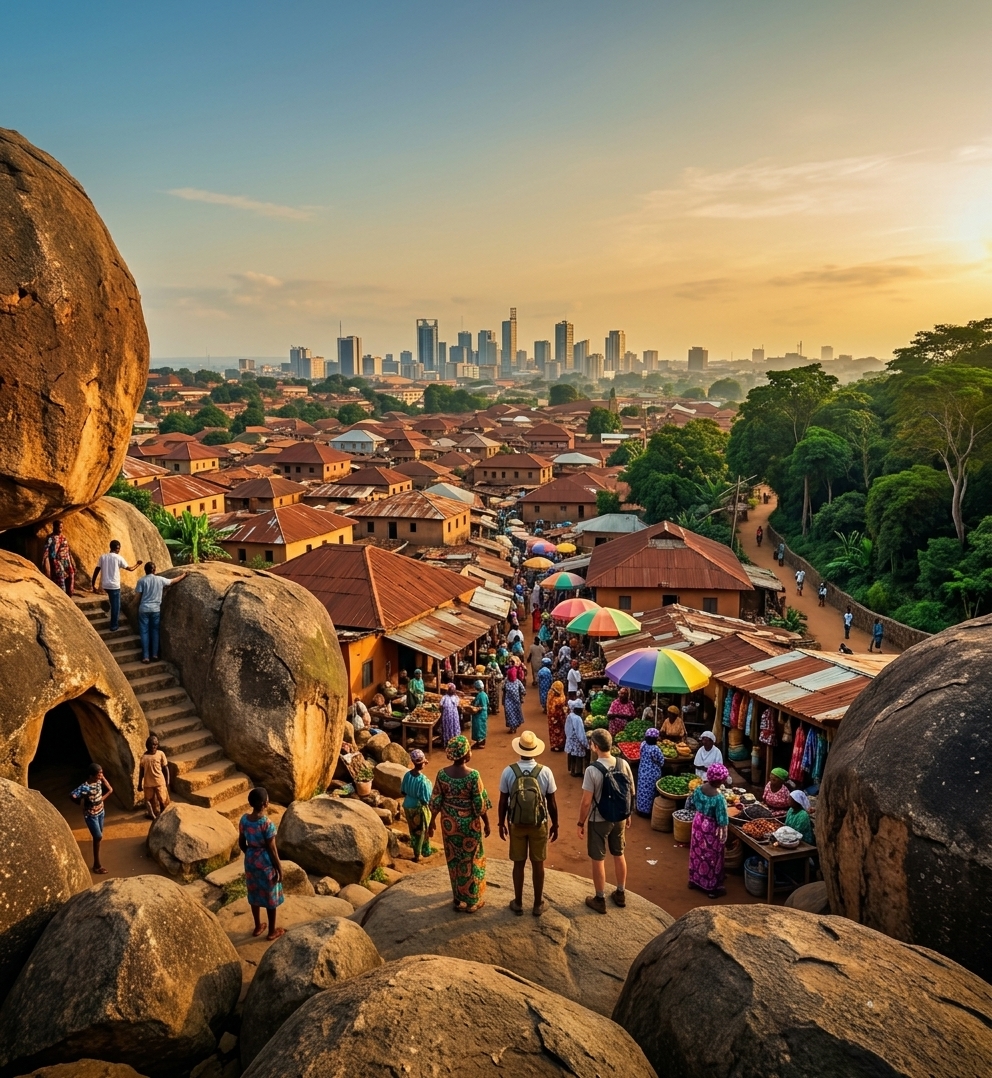
- Day 2: Early drive to Abeokuta. Climb the iconic Olumo Rock for stunning views and learn local history, then see the Centenary Hall and shop at Itoku Adire Market before sampling Egba cuisine—overnight in Abeokuta’s Oke-Ilewo district.
- Day 3: Head to Ibadan. Visit the University of Ibadan Zoological Garden, the immersive Mapo Hall, and Agodi Gardens for a late lunch. Consider sunset at Bower’s Tower for panoramic city views—stay in Bodija, Ibadan.
- Day 4: Journey to Osogbo. Spend your day touring the Osun-Osogbo Sacred Grove (a UNESCO site) and Nike Centre for Art and Culture. If time allows, wander Osogbo’s vibrant local art markets—overnight in central Osogbo.
- Day 5: Make the return trip to Lagos. Spend a final afternoon at Freedom Park and Makoko Floating Village for an offbeat Lagos finale before flights out. If flying late, enjoy a night in Ikeja near the airport for convenience.
Budget
Overall, South West Nigeria offers excellent value across this route. Daily spend for mid-range travellers is generally moderate, covering local hotels, intercity transport, meals, and occasional paid entry (Olumo Rock, Sacred Grove). Lagos nightlife, international eats, and art shopping are the main splurges. Regional bus rides are cheap; private driver hire costs more but saves time and hassle, and is worth the safety. Pre-book hotels and cars, and consider reserving entrance tickets for popular sites in Lagos during weekends or holidays to avoid queuing. Art and fabric markets offer plenty of room for bargaining, so factor in some cash for souvenirs.
Practical tips
Buy a local SIM card (MTN or Airtel) for reliable, affordable mobile internet across all major hubs. Download offline maps to navigate urban mazes. Nigeria’s cash economy means some ATMs may not work for foreign cards; always carry sufficient naira, but keep valuables safe. Dress modestly in markets and shrines, and ask before photographing people, especially in tribal areas and religious sites. Roads are policed and generally safe by day; avoid intercity drives after dark. Use bottled water everywhere and taste local jollof and street snacks with care. If self-driving, pre-plan fuel stops—petrol stations can be variable outside Lagos. Book key experiences (Osun Sacred Grove, Olumo Rock tour) ahead, and check for local festivals which can add colour but increase crowd sizes.